

Key Takeaways
- A routine eye exam can detect cataracts, sometimes before you notice any changes in your vision.
- Cataracts develop slowly, and early signs like blurry vision or light sensitivity are easy to miss on your own.
- Optometrists use specific tools during an exam to check the lens directly for signs of cataracts.
- Catching cataracts early helps your optometrist monitor changes and plan next steps at the right time.
- Certain habits, like wearing UV-protective sunglasses, can support long-term eye health.
If you or a loved one has been noticing changes in your vision, you may be wondering if cataracts could be the cause. Maybe colours have seemed a bit washed out, or driving at night has been more difficult than it used to be. At Northern Lights Optometry, we use technology during routine eye exams to detect signs of catara
Yes, a regular eye exam can detect cataracts, sometimes before you’re even aware something has changed. That’s one reason routine eye care matters well beyond updating a glasses prescription.
An Overview of Cataracts
Inside your eye is a natural lens that focuses light onto the retina at the back of your eye. As you age, proteins in that normally clear lens can begin to clump together , blocking or scattering light instead of letting it pass through clearly. That cloudiness is a cataract.
Cataracts develop slowly, which is exactly what makes them easy to miss at first. You won’t wake up one morning with a cataract. The changes build over months or years, and most people don’t notice anything unusual until the cloudiness has already progressed.
Signs and Symptoms Worth Knowing
How Long You Can Have Cataracts Without Knowing?
You can have a cataract for years without realizing it. Many cataracts develop slowly, so you may not have symptoms at first. By the time you notice something is wrong, the cataract may already be more advanced.
Signs of a Cataract
As the cataract progresses, you may notice signs that your vision is changing. Things may look blurry or dim, even if your glasses prescription is up to date. You might find yourself needing updated glasses more frequently than usual.
Bright lights, glare, or halos around headlights at night can become more noticeable. Colours that once looked vivid may start to appear faded or slightly yellow, as if you’re staring out of a foggy window.
How a Regular Eye Exam Detects Cataracts
Technology Used During the Exam
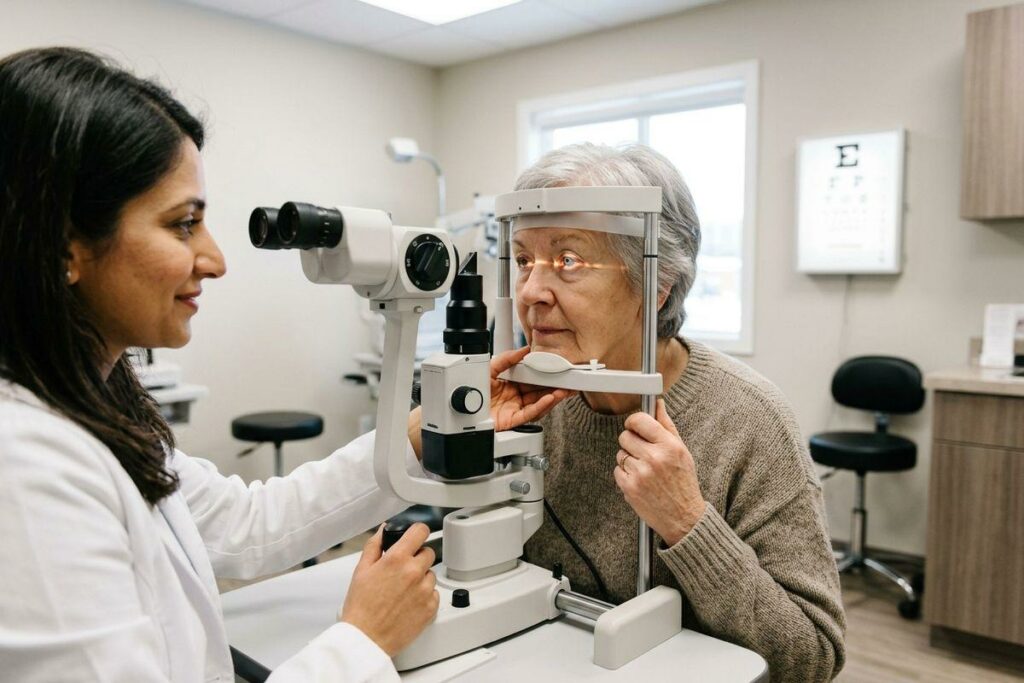
Several parts of a comprehensive eye exam work together to spot cataracts. During a slit-lamp exam, your optometrist shines a thin beam of light into your eye and looks directly at the lens for any signs of cataracts. A visual acuity test checks how clearly you can see at different distances and can flag unexplained changes.
When your pupils are dilated, your optometrist can get a better view of the retina and other structures at the back of your eye . Together with other parts of the eye exam, this helps your optometrist assess your overall eye health and determine whether any follow-up are is needed.

What Happens After a Cataract Is Found?
Minor Cataracts
Not every cataract needs immediate surgery. When a cataract is caught early, an updated glasses prescription can help manage vision changes in the short term. Your eye care team can schedule routine follow-up appointments to track how the cataract is progressing, so nothing gets missed as time goes on. Some individuals can manage cataracts for years without surgery.
More Progressed Cataracts
When a cataract has progressed and affects daily life, your optometrist can refer you to an ophthalmologist for surgical treatment. Cataract surgery involves removing the clouded lens and replacing it with a clear artificial one. Your optometrist and ophthalmologist can work together to support your care throughout the entire process.
Risk Factors and Eye Health Habits
Common Risk Factors
Age is the most common factor associated with cataracts, but it’s not the only one. UV exposure, smoking, a family history of cataracts, and diabetes are all linked to a higher likelihood of developing them. A past eye injury or trauma can also contribute to cataract formation in some cases.
Habits That Support Eye Health
There are a few habits that can support your eye health over time. Wearing sunglasses with 100% UV protection whenever you’re outdoors helps reduce long-term UV exposure. If you’re managing a condition like diabetes, keeping up with your overall health care also helps protect your eyes.
Making regular eye exams part of your routine gives our care team the chance to identify changes early and monitor them over time.
Schedule Your Eye Exam
At Northern Lights Optometry, our team is here to support your vision at every stage, whether that means monitoring early changes, updating your prescription, or connecting you with the right specialist when needed. If it’s been a while since your last eye exam, or if something just doesn’t feel quite right with your vision, we encourage you to book an appointment with your optometrist in Whitehorse today.