


Key Takeaways
- A stye is a small, tender bump on the edge of your eyelid.
- Styes form from a clogged, infected oil gland or lash follicle, so they don’t pass from person to person.
- Warm compresses can help a stye come to a head and drain on its own.
- Clean hands, fresh makeup, and personal towels can help keep new styes away.
- An optometrist in Whitehorse can help if your stye grows, hurts, or keeps coming back.
A stye can leave your eyelid swollen and sore, so it’s natural to wonder whether you should keep your distance from people until it heals. Parents ask us about this a lot during children’s eye exams, usually after a little one’s eyelid puffed up overnight.
Styes generally aren’t contagious, so you can hug your kids and share a meal without worrying about passing one along. A stye is a small infection in your own eyelid, and many clear up with simple home care. When one lingers or keeps returning, a closer look at your eyelid and eye health can help find out why.
What Is a Stye?
A stye is a small bump on the edge of your eyelid that looks a lot like a pimple. It forms when an oil gland or eyelash follicle gets infected. Kids and adults both get them, so styes are a familiar sight in many homes.
There are 2 types. An external stye shows up at the base of an eyelash, right on your lash line. When the infection sits in an oil gland under your eyelid, it’s called an internal stye, and it can be harder to see.
Signs of a Stye
Along with the bump itself, a stye can cause:
- Swelling that sometimes spreads across your whole eyelid
- A scratchy feeling, like something’s stuck in your eye
- Sensitivity to light
- Extra tearing
Why Styes Don’t Spread From Person to Person
A stye starts when a clogged oil gland or lash follicle traps bacteria and becomes infected. Since the infection stays tucked inside your own eyelid, styes generally aren’t considered contagious. You won’t pass one to someone through a hug or a shared bowl of popcorn on movie night. Anyone can get one, at any age.
But the bacteria inside a stye can still move around. If you touch the bump and then your other eye, or share a towel or pillowcase, you can spread small amounts of bacteria. So wash your hands before and after you touch your face, and swap in a fresh pillowcase while it heals.
Things That Can Raise Your Risk
Your chances of getting a stye can go up if any of these sound familiar:
- You rub your eyes before washing your hands.
- You wear contact lenses.
- You use old eye makeup or share it with others.
- You have blepharitis, rosacea, or diabetes.
How a Stye Differs From Pink Eye
A red, puffy eye can leave you guessing whether you have a stye or pink eye. Pink eye, also called conjunctivitis, is inflammation of the thin, clear layer that covers the white of your eye and lines your inner eyelids. Unlike a stye, viral and bacterial pink eye spread easily from person to person.
A stye appears as a tender bump on your eyelid. Pink eye usually turns the white of your eye pink, and it often comes with itching or sticky discharge.
Can’t tell which one you’re dealing with? Your optometrist can look at your eye and sort it out, which matters because pink eye may mean keeping your child home from school for a while.
How to Help a Stye Heal at Home
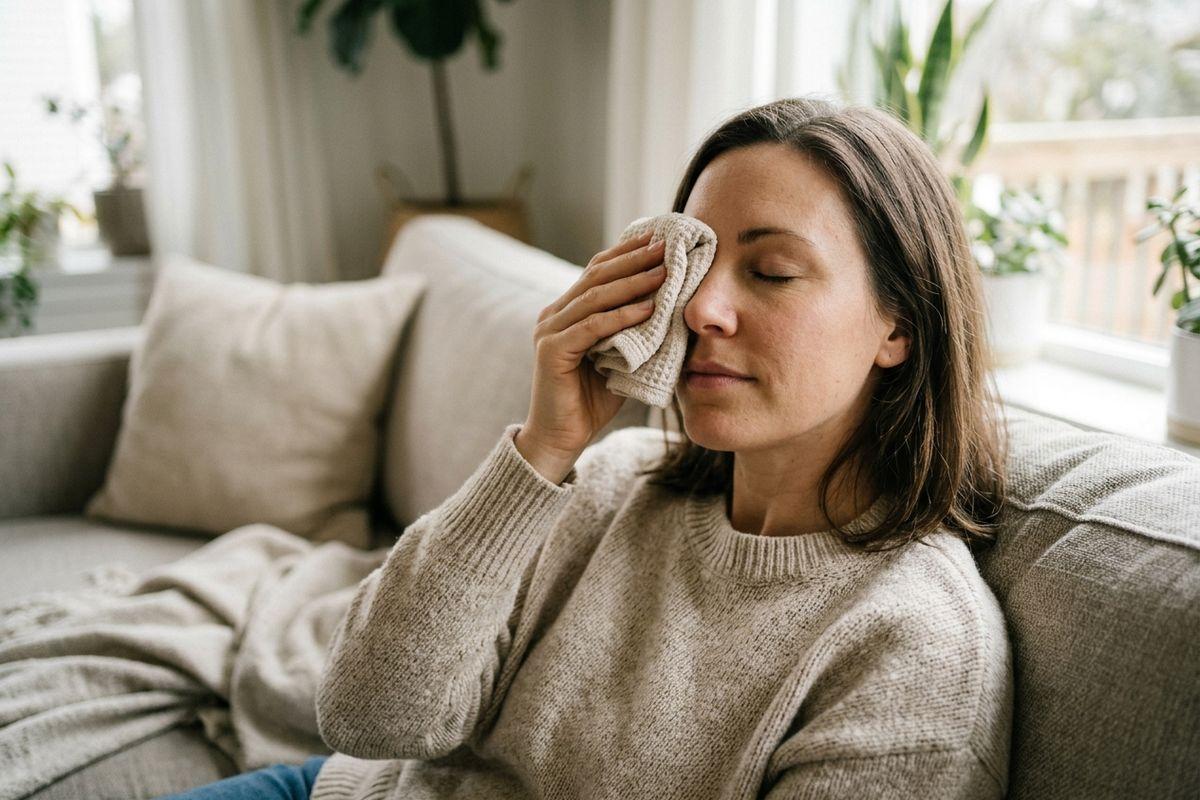
Many styes begin to improve within a few days and clear up within 1 to 2 weeks. Applying a warm compress can help encourage natural drainage and support healing.
Soak a clean washcloth in warm water, wring it out, and hold it over your closed eye for 5 to 10 minutes. Repeat this 3 to 6 times a day. Test the temperature on the inside of your wrist first, since eyelid skin is thin and delicate.
Otherwise, leave the stye alone. Squeezing or poking it can push the infection deeper into your eyelid, so let it open and drain on its own.
How to Lower Your Risk of Another Stye
A few small habits can help keep new styes away:
- Wash your hands before you touch your eyes.
- Take off your makeup before bed.
- Replace your eye makeup after 3 months.
- Keep your towels, pillows, and makeup to yourself.
When to See an Optometrist About a Stye
Home care clears up many styes, but some need a professional’s attention. Book a visit if you notice any of these signs:
- Your stye hasn’t improved after a week or two of home care.
- The bump keeps getting bigger or more painful.
- A new stye shows up soon after the last one heals.
Seek urgent medical attention if you experience changes in vision, fever, or redness and swelling that spread beyond your eyelid.
How Your Optometrist Can Help
Your optometrist starts with a close look at your eyelids and lashes. If the infection needs extra help, they may prescribe antibiotic drops or ointment. You might need oral antibiotics if the infection spreads beyond the bump, and an eye care professional may need to drain a large stye.
Getting Help for a Stubborn Stye
A stye is uncomfortable, and it helps to know you can keep spending time with the people you love while it heals.
If your stye sticks around or new ones keep showing up, our optometrists at Northern Lights Optometry can examine your eyelids and help you find relief. Book an appointment at our clinic, and we’ll take a closer look.