


Key Takeaways
- Contact lenses can absorb your natural tear moisture.
- Daily screen time reduces your natural blink rate.
- Proper lens care habits help maintain eye comfort.
- Alternative contact lens types offer improved oxygen flow.
- An optometrist in Whitehorse can guide your treatment plan.
You’re halfway through your workday and trying to focus, but a gritty sensation in your eyes keeps distracting you. This uncomfortable feeling is a common frustration for contact lens wearers, and it is one of the most frequent complaints we hear at Northern Lights Optometry.
When contacts restrict oxygen and absorb moisture, they disrupt your natural tear film and create friction with every blink. Fortunately, making a few simple adjustments to your daily habits can help to relieve dry eye symptoms and bring back your comfort.
The Link Between Contact Lenses and Dry Eye
How Lenses Affect Your Tears
Contact lenses sit directly over your cornea. This physical barrier can affect the moisture of your eyes and distribute moisture, depending on the contact lens material you wear. Some materials also breathe better than others.
- Soft lenses can absorb the water from your tears like a small sponge.
- A poor fit can cause edge awareness, friction bumps on the inside of the lids and decrease both comfort and oxygen.
- Thick lens materials can be less comfortable.
- Different materials can cause different oxygen transmission to the cornea.
Reasons for Sudden Dryness
Sometimes comfort shifts in time. You might have worn the same brand for years before noticing a problem, like blurry vision from dryness. This sudden change is can be triggered by subtle shifts in your environment or health, such as:
- Changes in seasonal weather or indoor heating that dry out the air.
- New medications that lower your natural tear production.
- Underlying health conditions that alter your tear chemistry and tear production.
Common Signs of Poor Moisture
Your eyes give clear signals when they need more hydration.
- A gritty or sandy sensation develops under your eyelids, making your eyes feel uncomfortable when blinking.
- Your eyes look red or feel burning while wearing your contact lenses.
- Bright lights feel uncomfortably harsh during daily activities.
Daily Habits That Can Worsen Symptoms
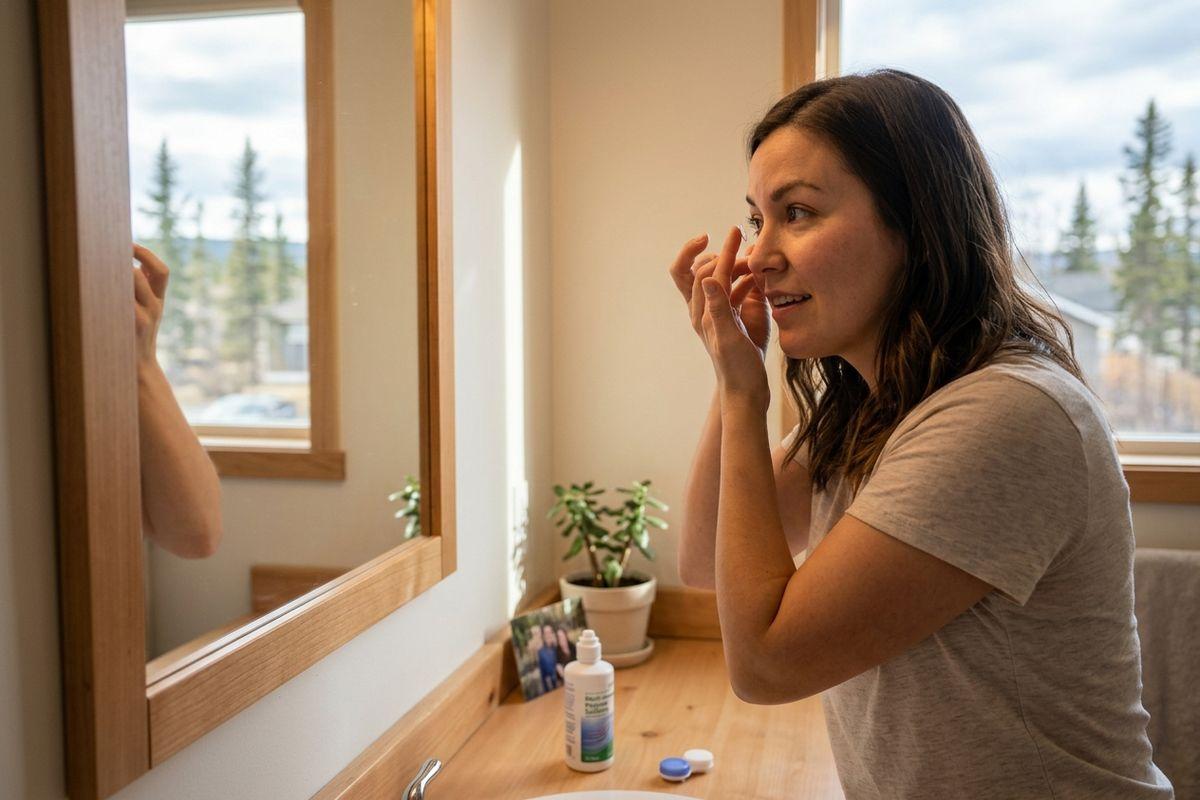
Your daily routine plays a large role in lens comfort. Small shortcuts can add up to noticeable irritation over time.
Lens Wear Time
Pushing your contacts past their intended limits reduces their performance because the material breaks down and collects debris over time. Watch out for these common habits that compromise your eye health:
- Stretching the disposal schedule: Keeping lenses past their suggested throw out frequency can increase protein buildup.
- Skipping nightly removal: Sleeping in daily lenses dries out your eyes overnight and can cause oxygen starvation and significant complications in time.
- Forgoing a rest day: Wearing lenses constantly prevents natural oxygen recovery.
Lens Care Routine Mistakes
A quick rinse with lens solution does not remove everything from your lenses. Stubborn daily deposits build up invisibly and require proper attention and contact lens care to keep your eyes healthy.
- Skipping a manual rub of your contact lenses leaves stubborn protein on the lens surface.
- Using the wrong lens solution can create a chemical reaction with your tear film.
- Exposing lenses to tap or bottled water can introduce harmful microscopic elements.
- Keeping the same storage case for too long can allow bacteria to grow.
Ways to Improve Moisture and Comfort
You can take immediate steps to support your eye health.
Screen Time Rules for Dry Eye
Digital devices take up a lot of your attention, and staring at screens naturally lowers the frequency that you blink. This reduced blink rate contributes to uncomfortable digital eye strain. To help, try:
- Looking 20 feet away every 20 minutes for 20 seconds.
- Blinking fully to spread fresh moisture across your eye.
- Resting your eyes from digital screens periodically.
- Use a quality artificial tear suggested by your optometrist.
Simple Home Habits
Your home environment directly impacts your tear film. You can adjust your surroundings to support better hydration throughout the day, including:
- Using lubricating artificial tears for temporary relief throughout the day.
- Applying a warm compress to closed eyes in the evening to keep oil glands unclogged and working well.
- Running a humidifier in dry indoor rooms to add moisture back into the air.
Alternative Lens Options for Relief
Sometimes your eyes need a different approach entirely. Material technology continues to evolve, giving you more choices than ever before.
Your eye doctor can recommend modern materials designed for sensitive eyes to help manage dry eye conditions and retain moisture more effectively.
- Daily disposable lenses reduce protein buildup.
- Silicone hydrogel allows more oxygen flow compared to older materials.
Clear, Comfortable Vision
Everyone needs a personalized approach to vision care because no two eyes respond to treatment in the exact same way. At Northern Lights Optometry, our team evaluates your specific symptoms to create a tailored plan that fits your life.
At Northern Lights Optometry, we offer thorough assessments to help identify the root cause of your discomfort, providing comprehensive care for families across Yukon. Reach out to our clinic today to schedule an appointment and discuss your vision and contact lens options.